Managing nutrition programs that serve 4.5 million children daily requires precision, compliance, and efficiency¹. Effective CACFP meal planning requires understanding federal guidelines and implementing systematic approaches that ensure every child receives nutritious meals while maintaining program compliance. With $3.5 billion in annual reimbursements at stake, proper planning isn’t just beneficial—it’s essential for program sustainability¹.
For CACFP sponsors and childcare centers, meal planning isn’t just about nutrition — it’s about protecting reimbursement, avoiding disallowances, and staying audit-ready. Every claim month, small planning mistakes — missing whole grains, miscredited combination foods, or incomplete infant documentation — can result in reduced claims or corrective action. And by the time those issues are discovered, it’s often too late to fix them. This guide breaks down how to plan CACFP-compliant meals the right way, avoid the most common errors, and build a system that supports accuracy across your entire network.
Recent research involving 28 state CACFP administrators reveals that administrative challenges and resource limitations are the primary barriers to successful program implementation². However, modern childcare meal planning software can automate many compliance tasks, allowing sponsors to focus on what matters most: delivering quality nutrition to children.
This interactive guide combines expert insights and practical tools to transform your approach to meal planning. Whether you’re overseeing a single site or managing an entire network of sites, these strategies will streamline your operations while ensuring full compliance.
Understanding CACFP meal patterns is essential for creating compliant menus that meet federal standards. The USDA has established specific meal patterns that define what constitutes a reimbursable meal or snack, with requirements varying significantly by age group and meal type.
Understanding CACFP meal patterns is essential for creating nutritious and compliant menus. The USDA has established specific meal patterns that define what constitutes a reimbursable meal or snack. These patterns specify the required food components and minimum serving sizes for different age groups.
Each meal pattern includes five food components: meat/meat alternates, vegetables, fruits, grains, and milk. For breakfast, the required components are fruits/vegetables, grains, and milk. Lunch and supper must include all five components, while snacks require two different components from the five available options.
The meal patterns also specify which foods are creditable toward meeting these requirements. For example, whole grain-rich foods must comprise at least half of all grains served weekly, and only pasteurized juice can count toward the fruit component, with limitations on frequency.
Breakfast Requirements:
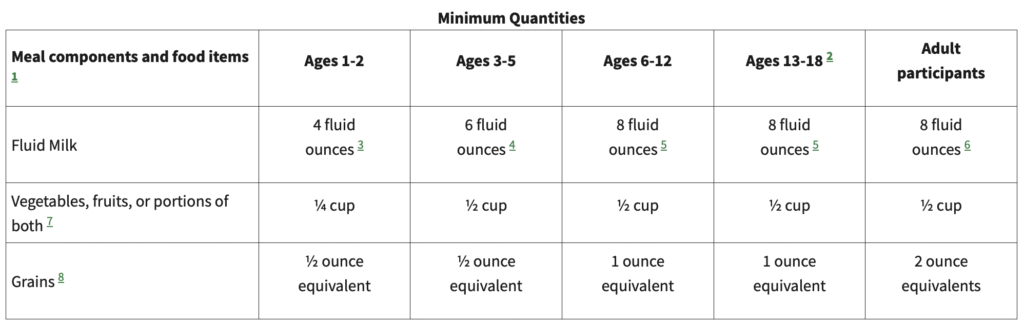
Lunch/Supper Requirements:
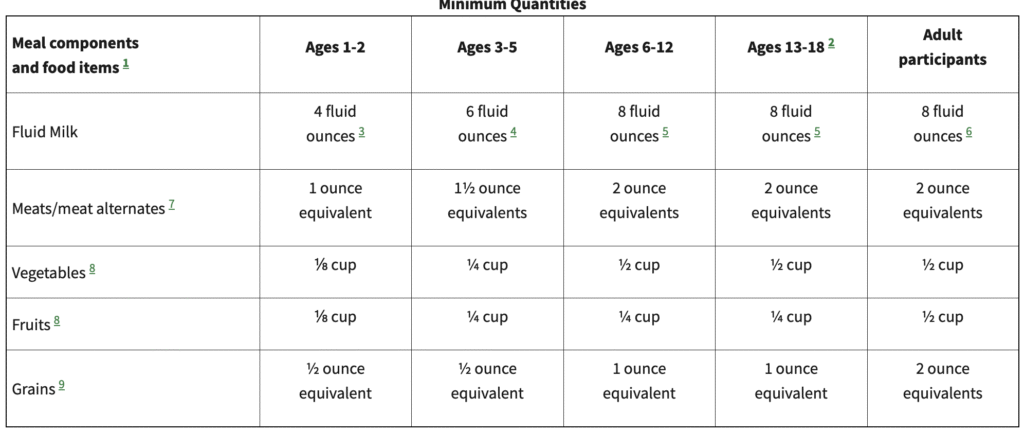
Snack Requirements
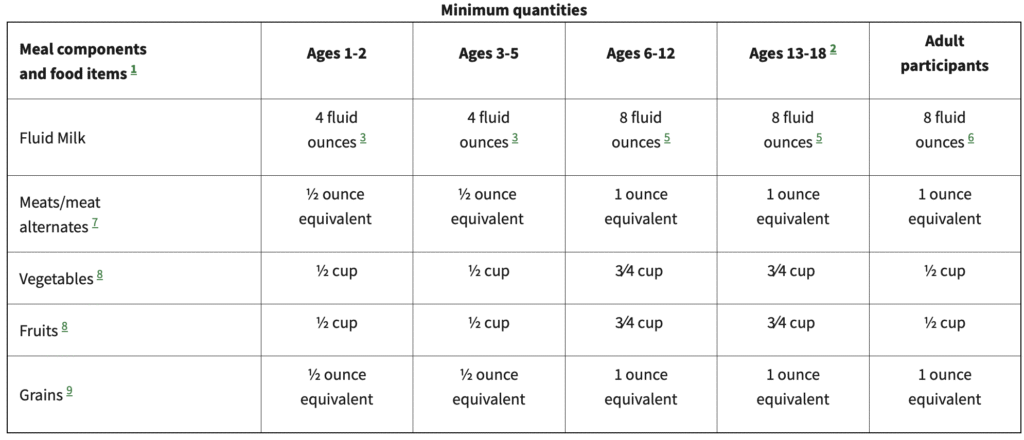
Even experienced programs can fall into compliance traps. Here are the most frequent issues identified by state administrators²:
🚫 Top 5 Compliance Pitfalls:
🔧 Quick Fix Solutions:
Creating effective menus requires balancing nutritional requirements, operational constraints, and participant preferences. Successful CACFP menu planning goes beyond simply meeting minimum requirements—it creates appealing, varied meals that children actually want to eat.
📋 Cycle Menu Builder
Cycle menus aren’t just a planning convenience – they’re a compliance safeguard. By standardizing meals across weeks, sponsors and centers reduce last-minute substitutions, ensure creditable components are served consistently, and simplify documentation during reviews.
Week 1 Planning Template:
Monday:
Tuesday through Sunday: [Repeat format]
🎯 Cycle Menu Success Metrics:
🌈 Nutrition Balance Tool
Nutritional balance extends beyond meeting minimum CACFP requirements to creating meals that support optimal child development. Studies show that colorful, varied menus increase children’s willingness to try new foods by 30%³.
Weekly Nutrition Tracker:
💡 Nutrition Density Boosters:
Incorporating seasonal and local foods enhances both nutrition and cost-effectiveness. Seasonal produce is typically 20-30% less expensive and contains higher nutrient levels than out-of-season alternatives.
📅 Seasonal Planning Calendar
Spring (March-May):
Summer (June-August):
Fall (September-November):
Winter (December-February):
Advanced CACFP software like KidKare streamlines the entire planning process, transforming complex compliance requirements into manageable, automated systems. KidKare takes advantage of USDA Food Buying Guide-approved food lists to plan, manage, and distribute sponsor menus with creditable ingredients, ensuring your network serves creditable meals consistently. The software eliminates guesswork by providing access to pre-approved foods that meet CACFP requirements.
🚀 KidKare Menu Features
Master Menu Distribution:
Cycle Menu Automation:
Smart Quantity Estimation:
📊 Compliance Dashboard
Real-Time Monitoring:
Dietary Restrictions Management:
Audit Preparation:
🏢 Multi-Site Management Tools
Network Overview Dashboard:
Site-Specific Support:
Centralized Reporting:
Note: Features are subject to change based on sponsor policies and state-specific requirements.
The key to success lies in building strong foundational knowledge of CACFP requirements, developing efficient planning systems, and leveraging technology to automate routine tasks. KidKare’s comprehensive features address every aspect of meal planning, from initial menu development through final compliance documentation.
By implementing these strategies and utilizing appropriate technology, sponsors can ensure their programs provide nutritious, appealing meals while maintaining full compliance with CACFP requirements. The result is better nutrition for children, reduced administrative burden for staff, and stronger program sustainability for the future.
If you are a single location center, plan compliant meals once — not fix them after the fact. [buy our software here].
If you are a CACFP sponsor, see how sponsors use KidKare to catch meal planning errors before claims are submitted. [book a 15-minute discovery call here].
📚 Additional Resources: