Feeding children every day is one of the biggest costs of running a family child care. Whether you’re already on the Child and Adult Care Food Program (CACFP) — or not quite ready yet — you do have ways to recoup a portion of what you spend on food.
This post explains the two financial “roads” you can take, what each one gives you, and why documentation is the key to keeping more of your hard-earned money either way.
Depending on your tier (Tier I or Tier II), each reimbursable meal or snack yields a specific amount per child, per day.
These reimbursement rates are published annually by USDA. Think of it as additional income that offsets your food expenses.
This is an important point many new providers misunderstand. Per USDA CACFP guidance:
Providers participating in CACFP do not have to submit food receipts to their Food Program sponsor, as long as they maintain daily meal counts, attendance, and menus that support the claim.
This makes CACFP unique — it reimburses based on records, not receipt paperwork.
Carrie Sullivan is the Executive Director of Provider’s Network, Inc. (PNI), a family childcare home sponsoring organization in Nebraska, has shared some insights:
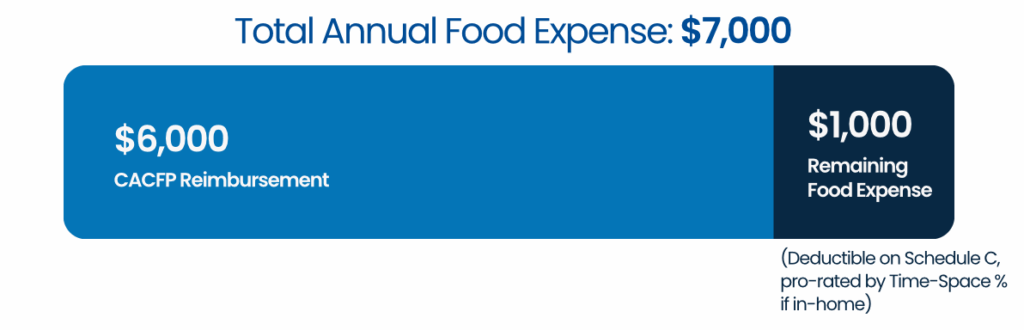
“If your reimbursement for the year was $6,000 but your grocery expenses were $7,000, you could deduct the extra $1,000 as a business food expense.”
This is directly aligned to IRS guidance for family child care homes, which states:
Providers may deduct the cost of food served to children beyond the amount reimbursed by CACFP.
This means
Read Sponsor Spotlight: Carrie Sullivan of Provider’s Network, Inc
Let’s break down how this works with actual numbers. Imagine you spent $7,000 on food for your childcare business last year.
Throughout the year, you:
At tax time:
Additionally, you can still deduct food costs for:
For example, if you spent $1,000 on food last year but your family consumed 30% of it, you would indicate 70% business use. Parachute’s categorization system allows you to clearly separate personal consumption from legitimate business expenses, ensuring you maximize deductions while remaining compliant with tax regulations.
Some providers choose not to participate in CACFP (or aren’t ready yet). But here’s the good news: You can still deduct the cost of food you serve to children — if you document it properly.
The IRS Family Child Care Tax Guide allows deductions for:
This applies whether or not you participate in CACFP.
Without records, you lose the deduction.
To take the deduction confidently, IRS guidance recommends you keep:
This is where most non-CACFP providers struggle.
Using the same values:
If you spent $7,000 in food last year:
How the deduction works:
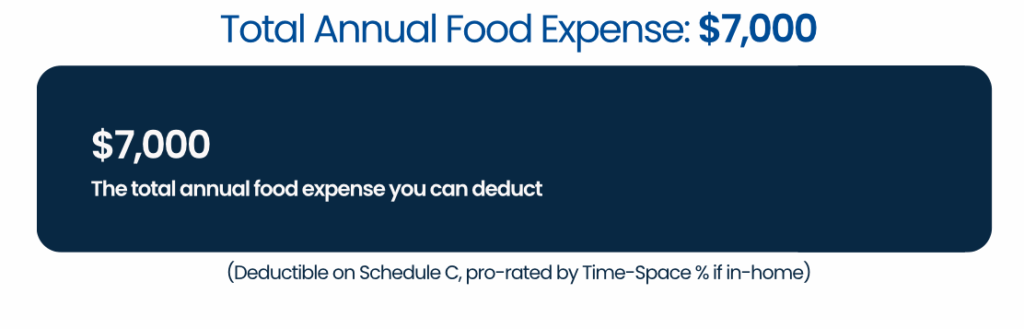
Even without CACFP, that can reduce your taxable income by thousands.
When you’re not in CACFP:
This is exactly why many non-CACFP providers eventually migrate to joining CACFP: the monthly cash flow is more impactful and requires less recordkeeping burden.
But until then — tax savings are still on the table.
Parachute isn’t what “gets you money back” — your documentation does.
Parachute is the tool that keeps everything organized, accurate, and ready for tax season so you never miss a deduction or scramble in late March.
Whether you are on Food Program or not, Parachute is a great tool for recording expenses, time/space % calculation, storing receipts, pulling reports, like Schedule C, Detailed Expenses Report (8829) for your tax professional. And also Parachute is seamlessly integrated with KidKare.
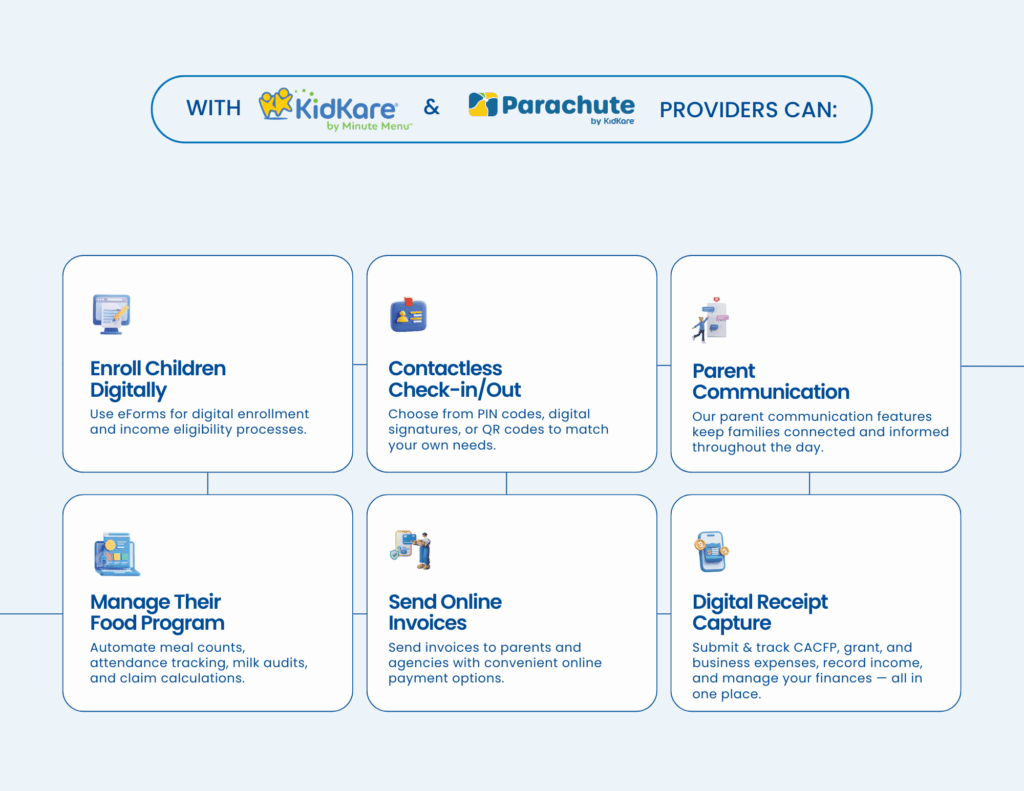
Whether you’re on CACFP or not, Parachute gives you:
In short:
Parachute keeps your entire childcare business organized — so you can keep more of what you earn and never fear tax season again.