In today’s rapidly evolving childcare landscape, entrepreneurs need to stay ahead of emerging trends and requirements. Whether you’re an experienced provider looking to expand or a newcomer to the industry, this comprehensive guide will illuminate your path forward. With actionable strategies for securing funding, navigating licensing requirements, and maximizing benefits from the Food Program, you’ll
As a child care provider in the Child and Adult Care Food Program (CACFP), you have a valuable opportunity to contribute to the overall well-being and development of the children under your care. By offering nutritious meals with reduced sodium content, you can help children develop healthy eating habits and support their growth. In this
Thanksgiving is a special time of year when families gather to express gratitude and share a delicious meal. As childcare providers, you have the opportunity to create a memorable and educational experience for the little ones in your care. In this article, we will explore a variety of fun activities and easy recipes that will
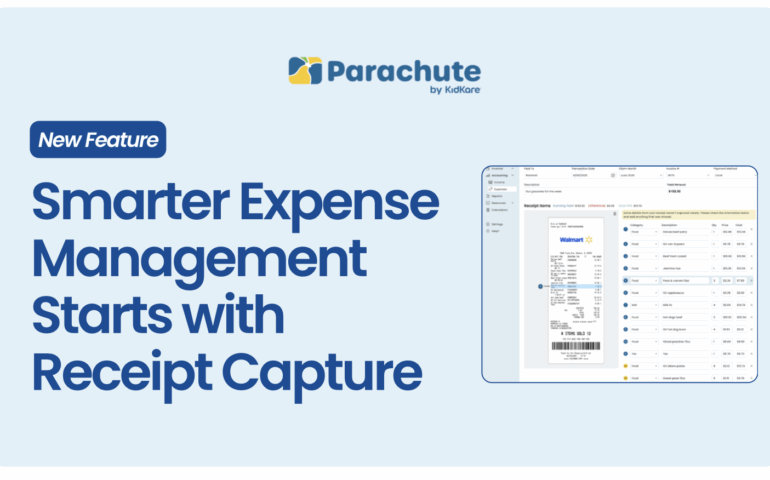
We’re excited to announce that starting October 15, sponsored centers using Parachute will have access to the new Receipt Capture feature — designed to simplify how Food Program expenses are recorded, reviewed, and verified. Read Full Release Notes for October here → Receipt Capture, which is available exclusively in Parachute, helps sponsors cut down manual expenses review time and catch errors —

Beginning October 7, you will access Accounting data from Parachute rather than KidKare. All of your Accounting data (expenses, invoices, etc…) will live within the Parachute, which you can toggle to from KidKare at any time. Your Parachute account is already active, your current login credentials work, all your accounting data has been automatically transferred, and
Every childcare provider knows that moment when a picky eater finally tries a new vegetable, or when a child asks for seconds of a healthy meal you’ve carefully planned. These small victories happen because you understand something important: the meals you serve today are building tomorrow’s healthy adults. National Child Health Day, celebrated each first

National Farm to School Month in October provides an excellent opportunity for childcare centers and in-home providers to embrace farm-based activities and nutrition education. This celebration has a significant impact on children’s health and learning experiences. The primary goals of Farm to School programs in early childhood settings are to serve locally-grown, healthy foods to young children,
As the landscape of nutritional guidelines evolves, childcare providers must adapt to new regulations that ensure children receive healthier meals. One significant change coming into effect is the updated added sugar limits for breakfast cereals and yogurts under the Child and Adult Care Food Program (CACFP). With the implementation date set for October 1, 2025, it
Running a family childcare business can be deeply rewarding, offering the opportunity to shape young minds and provide essential services to families in your community. However, this profession comes with unique challenges that can lead to significant stress and burnout. Recent studies have shown alarming rates of burnout among childcare professionals, with many experiencing physical
September marks Baby Safety Month, a crucial annual campaign dedicated to raising awareness about the paramount importance of keeping our littlest ones safe. For childcare providers, this month serves as a poignant reminder of the weighty responsibility we bear in safeguarding the precious lives entrusted to our care. Creating a secure environment for infants requires