
If you run a CACFP sponsor network, you already know the feeling. You start every month with a plan. By the end of the month, you’re buried in corrections, chasing signatures, prepping for reviews, and wondering where the time went.
You’re not bad at your job. You’re stuck in time traps.
After working alongside CACFP sponsors for over 30 years across all 50 states, our team has identified five operational patterns that consistently consume more sponsor time than anything else. They show up in home networks, center networks, multi-program organizations, and everything in between. They’re not unique to your operation. They’re universal.
The good news? Every single one of them is fixable. But you can’t fix what you haven’t named. So let’s name them.
What It Looks Like
A provider or center submits their monthly claim. Your team reviews it and finds errors: a missing meal component here, an attendance mismatch there, an expired enrollment form that should have been flagged weeks ago. You send it back. They fix some issues but not all of them. You send it back again. This goes on for days, sometimes weeks, before the claim is clean enough to submit to your state agency.
Now multiply that by every site in your network. Every month.
The real cost: The claims correction cycle doesn’t just consume hours. It delays reimbursement, creates friction with providers and centers, and increases the risk that exhausted staff miss errors that eventually become audit findings. When your team spends more time correcting claims than processing them, something is structurally wrong.
What Top Sponsor Do Differently
The sponsors who have eliminated the claims correction cycle share one common trait: they catch errors before claims are submitted, not after.
Automated edit checks that validate every claim at the point of entry, checking for attendance-to-meal-count mismatches, expired enrollments, meal pattern violations, capacity exceedances, and incomplete documentation, mean that by the time a claim reaches the sponsor’s desk, the obvious errors have already been flagged and resolved at the site level.
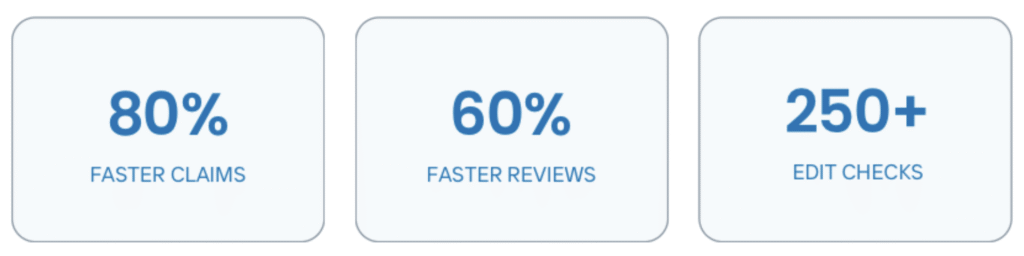
The result: Sponsors report up to 80% faster claims processing when sites submit cleaner data from the start. The correction cycle doesn’t shrink. It largely disappears.
What It Looks Like
New families need enrollment forms. Existing families need annual renewals. Some forms come back incomplete. Some come back with the wrong information. Some never come back at all. Your staff follows up by phone, email, and sometimes in person. When they finally get the forms back, they manually calculate Free, Reduced, or Paid eligibility, hoping they don’t make a math error that shows up in an audit.
For center sponsors, this process is compounded by the number of families across multiple sites. For home sponsors, the challenge is different but equally consuming: ensuring that every provider has current enrollment documentation for every child in their care.
The real cost: Incomplete or expired enrollment documentation is one of the most common findings during state agency reviews. It can also trigger the Serious Deficiency process if gaps are systemic. But beyond compliance risk, the enrollment paper chase is a massive time drain that steals hours from more valuable work, like coaching sites, improving program quality, and serving more children.
What Top Sponsors Do Differently
Sponsors who have eliminated the enrollment paper chase have replaced paper entirely with digital enrollment workflows. Parents receive a link on their phone, complete the form with e-signatures, and the system auto-verifies eligibility based on household size and income. The sponsor sees a real-time dashboard showing which enrollments are complete, which are pending, and which are about to expire.
Batch renewal tools automatically trigger re-enrollment before forms lapse. Pre-populated fields reduce parent errors. And every completed form is cloud-stored with a timestamped audit trail.
The result: Sponsors who adopt digital enrollment consistently report that a process that used to take weeks now takes days. Completion rates jump because parents can submit forms on their own schedule, from their own phone. And FRP eligibility errors, one of the most common claim disallowance triggers, are virtually eliminated by automated verification.
What It Looks Like
A monitoring visit is coming up. Your monitor pulls out the binder. They print review forms, gather prior visit records, check the site’s enrollment status, review the last claims cycle, and organize everything they’ll need on-site. This preparation alone can take hours.
Then there’s the visit itself: documenting findings on paper forms, capturing signatures, making notes about follow-up items. After the visit, the monitor returns to the office to type up findings, scan documents, schedule corrective actions, and file everything in the right folder.
Multiply that by every required review across every site in your network, including the unannounced visits that USDA requires, and monitoring becomes a full-time burden rather than a quality improvement tool.
The real cost: When monitoring prep takes longer than monitoring itself, your team doesn’t have the bandwidth to actually coach sites and providers. Monitoring becomes a compliance checkbox rather than a program improvement activity. And when reviews are rushed or inconsistent due to time pressure, the documentation may not hold up under state agency scrutiny.
What Top Sponsors Do Differently
The sponsors with the most efficient monitoring operations have digitized the entire review process. Their monitors prepare using a centralized dashboard that shows each site’s compliance status, last review date, enrollment health, and recent claims data, all in one view. No binder assembly required.
On-site, they use digital review forms on a tablet. Findings are documented in real time with digital signatures. Photos can be attached. Corrective actions are assigned immediately and tracked automatically with due dates and follow-up reminders.
Back at the office, there’s nothing to type up. Everything captured during the visit is already in the system, searchable, reportable, and audit-ready.
The result: Sponsors report that monitors complete site reviews up to 60% faster with digital tools, and spend 75% less time on pre-visit preparation. That freed-up time goes back into coaching and program quality, which is what monitoring was supposed to be about in the first place.
What It Looks Like
You get the notification: a state agency review is scheduled. Immediately, a low-grade panic sets in. Not because your program is non-compliant, but because you’re not sure you can find everything they’re going to ask for.
Enrollment forms are in the filing cabinet. Claims data is in a spreadsheet. Training records are in an email folder. Monitoring reports are in a binder. Financial records are in a different spreadsheet. Some of it is in a staff member’s personal files. Some of it might be in last year’s archive box in the storage room.
Your team drops everything and spends days, sometimes weeks, locating, organizing, and assembling documentation. Normal operations suffer. Stress escalates. And when the reviewer asks for something you can’t find quickly, the anxiety compounds.
The real cost: Audit anxiety doesn’t start when the review is scheduled. It’s a constant background hum that affects how sponsors operate all year long. It shows up as over-documentation in some areas and under-documentation in others. It shows up as staff burnout. And it shows up as avoidable findings when records that do exist can’t be located quickly enough to satisfy a reviewer’s timeline.
What Top Sponsors Do Differently
The sponsors who approach state agency reviews with confidence rather than dread share one characteristic: every record they need is in one place, digitally stored, and searchable.
Enrollment forms, claims history, monitoring reports, financial records, training logs, corrective action documentation, menu planning records, and payment history are all cloud-stored with timestamps, change logs, and complete audit trails. When a state reviewer asks for a specific record, the sponsor searches by site, date, or record type and produces it in seconds.
The result: What used to require weeks of preparation becomes a matter of minutes. Sponsors tell us their state reviewers have actually complimented their documentation when records are organized, timestamped, and instantly accessible. Audit readiness stops being an event you prepare for and becomes the way your program operates every day.
What It Looks Like
Your board wants to know how many children you served last quarter. Your state agency needs a claims summary. A grant funder asks for meal count data by site type. A potential partner wants to understand your program’s impact.
Each request is reasonable. But answering any of them requires you to manually pull data from multiple sources, combine it in a spreadsheet, check it for accuracy, format it for the audience, and deliver it before the deadline. If you run multiple programs, such as CACFP plus SFSP plus At-Risk Afterschool, the data lives in even more places and the assembly process is even more painful.
By the time you finish one report, three more requests have come in.
The real cost: Manual reporting doesn’t just consume time. It creates accuracy risk (spreadsheet errors are notoriously difficult to catch), delays decision-making (leadership can’t act on data they don’t have), and undermines your ability to demonstrate program impact to the stakeholders who fund your work. For mission-driven organizations, the inability to quickly show how many children you’re feeding and how efficiently you’re operating is a strategic disadvantage.
What Top Sponsors Do Differently
Sponsors who have eliminated the manual reporting grind use centralized platforms where all program data, claims, enrollment, attendance, monitoring, financial records, across all programs and site types, rolls up into pre-built reports that can be generated, filtered, and exported in seconds.
Need total meals served across CACFP and SFSP combined? One click. Need claims detail by site for the last 12 months? One click. Need a monitoring completion report for your entire network? One click. Need to show your board the total children served, total reimbursement received, and program growth trends? One dashboard.
The result: Reporting stops being a project and becomes a function. Leadership gets the data they need when they need it. Grant reports are assembled in minutes instead of days. And your team’s expertise goes toward interpreting data and improving programs, not assembling spreadsheets.
If you recognized yourself in two or more of these time traps, you’re in excellent company. The vast majority of CACFP sponsors deal with some version of every single one, regardless of their experience, their dedication, or the size of their network.
The difference between the sponsors who are drowning in these traps and the sponsors who have escaped them isn’t effort. It’s infrastructure. It’s whether the tools they use were built for the way CACFP actually works, or whether they’re trying to force general-purpose tools and manual processes to do a job they were never designed for.
Here are the numbers from sponsors who made the shift:

Those numbers come from sponsors who replaced the correction cycle with automated edit checks. Who replaced the paper chase with digital enrollment. Who replaced the monitoring marathon with digital review tools. Who replaced audit anxiety with cloud-stored, searchable records. Who replaced the reporting grind with one-click reports.
They didn’t work harder. They changed the system.
We’d love to show you. Our team at KidKare has been building CACFP management software for over 30 years, and we work with sponsors in all 50 states.
If any of these time traps resonated, let’s spend 15 minutes together. We’ll show you exactly how KidKare addresses each one, with no commitment and no sales pressure.
📞 Schedule a 15-min discovery call.